
A narrow-diameter implantology protocol for the 70+ segment.
A minimally invasive implant protocol for the single-stage flapless indication, supported by peer-reviewed clinical evidence. For cases where bone volume, age, or treatment tolerance rule out conventional two-stage implantation.
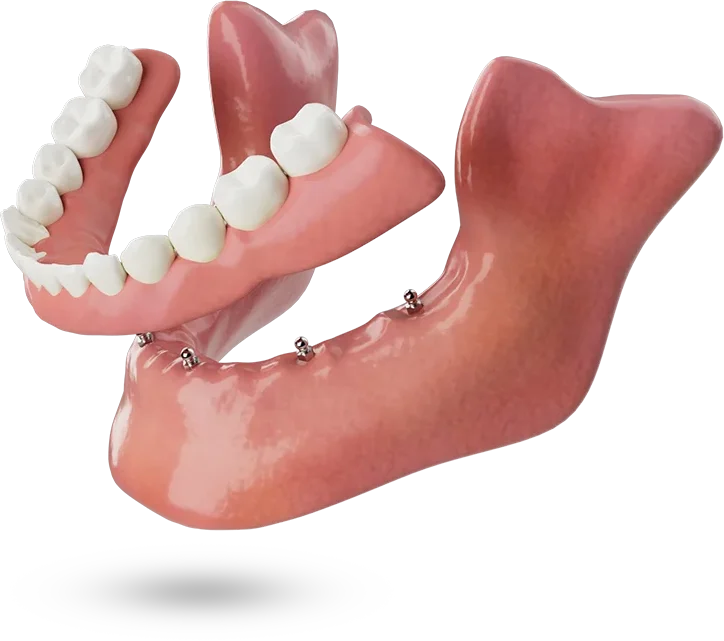
Two diameters, two head types, one indication-based system.
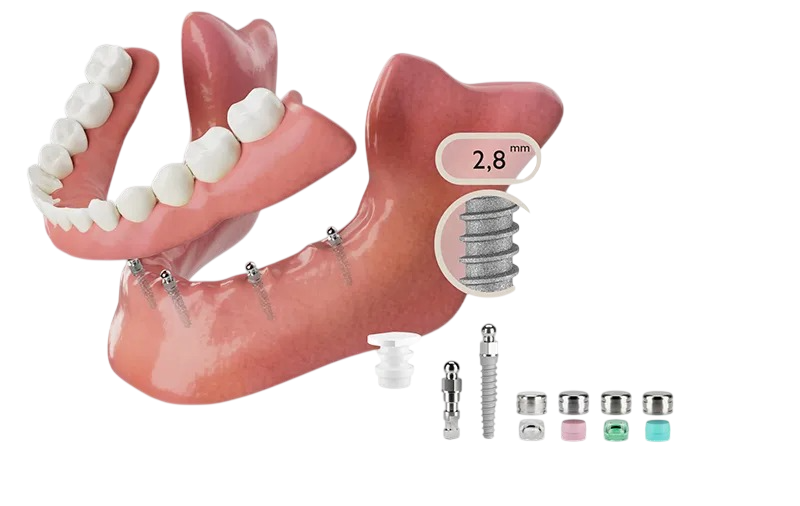
Single-piece narrow-diameter implants. Manufactured in Hungary.
Ø 2.3 mm ·
D1 / D2 boneØ 2.8 mm ·
D2 / D3 bone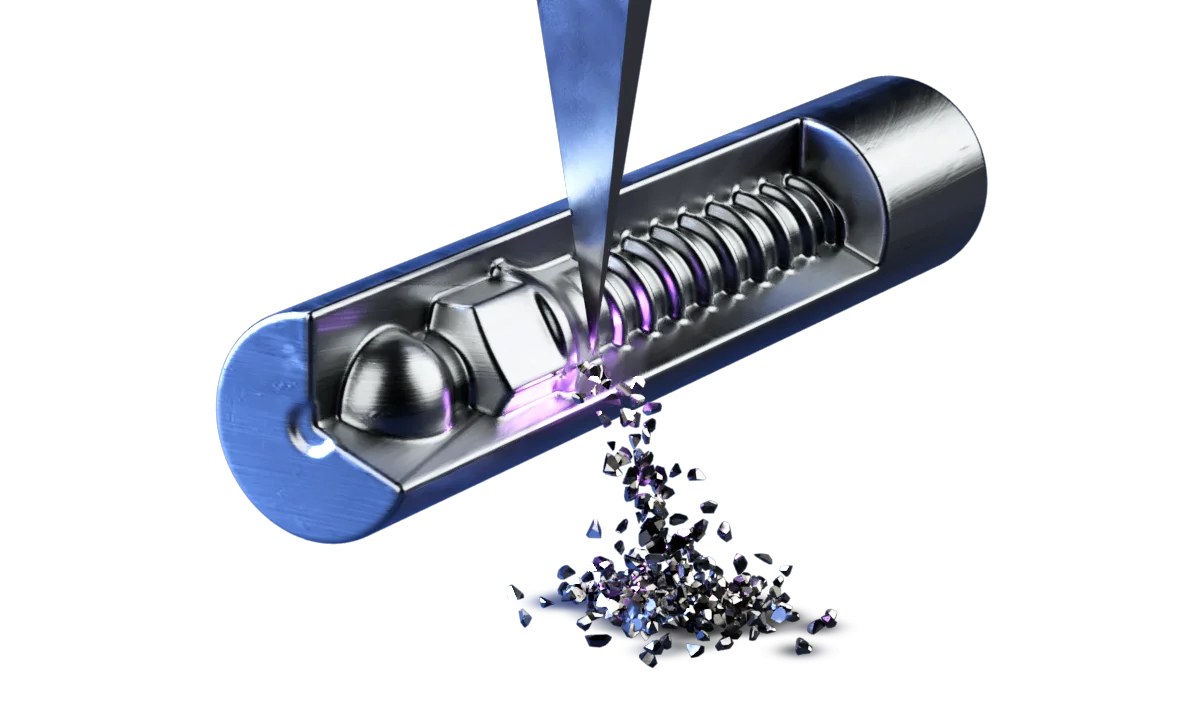
Grade 4 cold-worked titanium. SLA Surface.
Commercially pure cold-worked titanium meeting ISO 5832-2 and ASTM F67. SLA hybrid surface (sandblasted, blasted, thermal-etched) produces micropores sized 2 to 7 microns for accelerated osseointegration.
Indicated for these clinical situations.
20 implants. €1,000. Everything you need to begin.
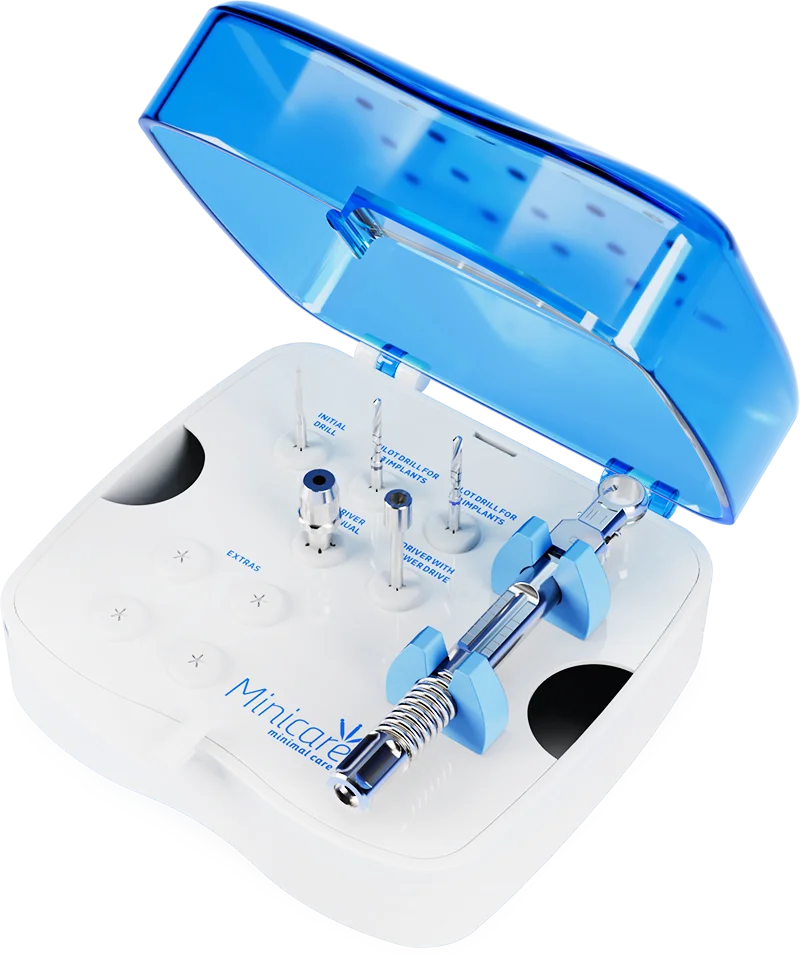
The current promotion for new Certified Partners. Volume pricing on your first MiniCare® order, plus the surgical kit, clinic listing, and patient marketing assets included free.
Apply for the MiniCare® Certified Partner program.
A short application reviewed by our clinical team. If your practice matches the indication profile, we schedule a 15-minute call within two business days.
Decades of clinical implantology, applied to a narrow-diameter platform.
Conventional two-stage implantology is correct for the cases it was designed for. When Dr. István Vajdovich placed some of the first modern dental implants in Hungary in the early 1980s, implantology followed a very different philosophy. The protocols available required healthy bone, extended healing periods, and treatment conditions many patients simply could not meet.
Over the following decades, his work focused not only on clinical implantology, but also on implant design, surface treatment technologies, and the long-term biological behavior of titanium implants. This experience later became part of the technological foundation of Denti System Kft.
MiniCare® was developed from that clinical and manufacturing experience as a narrow-diameter solution for a specific patient group: elderly patients with reduced ridge volume, denture wearers unwilling or unable to undergo augmentation, and patients seeking a less invasive and more affordable fixed solution.
When the indication requires augmentation, complex reconstruction, or maximum load distribution, conventional implant protocols remain the gold standard. When the patient presents with anatomical limitations, medical compromise, or financial constraints, narrow-diameter implants can provide a clinically valid alternative.
The MiniCare® platform combines decades of clinical experience, CE certification by SGS as a Class IIb medical device, SLA surface technology, and cold-worked Grade 4 titanium manufacturing developed within European implantology standards.
The goal is not to replace established protocols. It is to extend treatment possibilities to patients who might otherwise remain untreated.
Narrow-diameter implants are a valid alternative when the goal is to avoid bone augmentation.
Specific concerns, specific published answers.
Three of the most common clinical questions about narrow-diameter implants, answered with data from peer-reviewed systematic reviews and prospective trials. Citations link directly to the source literature.
Do narrow-diameter implants fracture under functional load?
A long-term retrospective analysis found a fracture rate of 1.05% across 1,428 narrow-diameter implants. Of the fractures recorded, 66.6% occurred in patients with parafunction (bruxism, clenching). Appropriate patient selection remains the dominant variable.
What does peri-implant bone loss look like long-term?
A systematic review of edentulous patients restored with NDIs (2.5–3.5 mm) reports marginal bone loss of 1.40 mm at 5 years. This sits within the Albrektsson success criteria applied to standard-diameter implants in the same patient profile.
How do they compare to standard-diameter implants?
Meta-analysis comparing narrow-diameter to standard-diameter implants found an Odds Ratio of 1.16 (95% CI 0.7–1.69), indicating no statistically significant difference in survival within appropriate indications. NDIs are documented across multiple indication ranges.
The full clinical bibliography is published on Denti System's research portal.
Independent peer-reviewed studies on MiniCare® and narrow-diameter implantology, including the systematic reviews cited above.
See MiniCare® placed, step by step.
Single-stage flapless protocol, from anesthesia to same-day prosthesis delivery.
Two protocols. Two indications. One clinical decision.
Use MiniCare® when all three apply.
Patient is aged 70+ with edentulous arch or severe denture instability.
Adequate bone volume, D1 to D3 quality, no augmentation needed.
Patient cannot or will not accept conventional full-arch investment.
Narrow-diameter implantology is a documented clinical category.
Narrow-diameter implants are a recognized indication class in the ITI Consensus framework, supported by systematic reviews, meta-analyses, and 5-year survival data published in peer-reviewed implantology journals. The evidence below is drawn from independent academic literature, not manufacturer claims.
Across 3,787 narrow-diameter implants in 1,005 patients.
The largest systematic review and meta-analysis of mini-implant-retained overdentures to date. Mean follow-up 28 months across 39 studies, with cumulative survival data published through 7 years.
Source: Clinical and radiographic outcomes of mini-implant-retained maxillary and mandibular overdentures: a systematic review and meta-analysis. Clin Oral Investig (2025).
Comparable survival to standard-diameter implants.
Meta-analysis comparing narrow-diameter implants to standard-diameter implants found no statistically significant difference in survival (Odds Ratio 1.16, 95% CI 0.7-1.69).
Klein, Schiegnitz, Al-Nawas. Int J Oral Maxillofac Implants (2014).
Recognized indication class in the ITI framework.
Narrow-diameter implants are classified by the ITI (International Team for Implantology) into three diameter categories with distinct evidence bases, indication ranges, and consensus statements.
Group 1 ITI Consensus Report. Clin Oral Implants Res (2018).
Marginal bone loss at 5-year follow-up.
5-year survival of 92.25% with marginal bone loss of 1.40 mm in fully edentulous patients restored with narrow-diameter implants (2.5–3.5 mm) supporting removable prostheses.
Maló Soares et al. Systematic Review. Med Oral Patol Oral (2021).
Three documented categories of narrow-diameter implant.
The MiniCare® platform covers Category 1 (2.3 mm) and Category 2 (2.8 mm) of the ITI classification. Both diameters sit within published survival ranges from multi-year prospective trials.
Mean survival rates from ITI Group 1 systematic review of clinical trials (12 to 109 months follow-up).
Clinical scope. All cited survival rates reflect appropriate indication selection. Narrow-diameter implants are documented in the literature for denture stabilization, single-tooth replacement in non-load-bearing regions, and edentulous arch restoration. They are not indicated for full-arch fixed reconstruction in regions of maximum load distribution, where conventional implant protocols remain the standard.
Apply for the MiniCare® Certified Partner program.
A short application reviewed by our clinical team. If your practice matches the indication profile, we schedule a 15-minute call within two business days.
Flapless, single-stage, no sutures required.
MiniCare® insertion is performed in a single step using a flapless technique. The procedure is minimally invasive and is typically completed under local anesthesia. In most cases, the patient leaves the same day with a stabilized dental prosthesis.
Confirm bone quality & indication
Best results in D1, D2, or D3 bone. In D4 (loose) bone, primary stability is harder to achieve and an alternative is recommended.
quality
Flapless transgingival insertion
Single-piece implant placed in one step. No flap, no sutures. Primary stability is the load-bearing criterion.
torque
Same-day prosthesis
Immediate or early loading is possible when torque targets are met. Patient typically wears the stabilized prosthesis the same day.
rehab
Best results when
Relative contraindications
Denti System Kft., Hungary. Established 1983.
One of the three oldest dental implant manufacturers in Europe. The first Denti implants were placed in 1983 by Prof. Dr. István Vajdovich. The MiniCare® system is the company's narrow-diameter platform, developed for indications outside the range of conventional implant geometry.
Manufacturing is conducted in Hungary under European medical device regulation. The system is audited and certified by SGS and produced in partnership with established European instrument and prosthetic component manufacturers.


Implantology has emerged as the Phoenix bird of dentistry. It has renewed itself and thus remained modern and ready for the challenges of the 21st century.
Answered before the call.
01
Will the implants fracture under functional load?
MiniCare® implants are produced from Grade 4 cold-worked commercially pure titanium (ISO 5832-2, ASTM F67). A long-term retrospective analysis of 1,428 narrow-diameter implants reported a fracture rate of 1.05%, with 66.6% of fractures occurring in patients with documented parafunction (bruxism, clenching). Appropriate patient selection is the dominant predictor of mechanical outcome. Published 5-year survival rates for implants under 3.0 mm range from 90.9% to 100% across clinical studies (Lustosa et al. 2024; Klein, Schiegnitz, Al-Nawas 2014).
02
Do I need additional certification or training to place these?
No additional certification is required for clinicians with implantology training. The MiniCare® protocol is single-stage and flapless, designed for placement under local anesthesia in a standard operatory. Surgical protocol documentation is provided with every order.
03
Will MiniCare® cases overlap with my current case mix?
The indication ranges do not overlap. MiniCare® is the single-stage flapless protocol, indicated for cases where bone volume, patient age, or treatment tolerance rule out the conventional two-stage protocol. Patients suitable for two-stage implantation continue to receive it. MiniCare® addresses the indication that currently leaves your clinic without an implant solution.
04
How does this narrow-diameter implant protocol differ from other systems?
MiniCare® is manufactured by Denti System Kft., one of the three oldest dental implant manufacturers in Europe (established 1983). The system is a CE-marked Class IIb medical device certified by SGS (Notified Body 1639) and manufactured under the ISO 13485 quality management system, produced in partnership with KOMET, IPPi, Terrats Medical, and Josef Gartner. Surface treatment is SLA hybrid with 2–7 micron micropores. The prosthetic line is OT-CAP compatible.
05
What is the minimum order to begin placing cases?
The current partnership offer is structured around an initial order of 20 implants, which includes the surgical tray and clinical onboarding. Full ordering terms are reviewed during the discovery call.
06
How quickly can my clinic begin placing cases?
The initial order includes all instruments required for placement, so no additional capital outlay or equipment lead time is required. Clinics typically place their first case within weeks of receiving the order, depending on patient scheduling.
07
How is implant traceability handled?
An Implant Pass is available upon request. The document is completed by the treating doctor and supports product traceability and patient documentation.
See if MiniCare® fits your case mix.
A short application reviewed by our clinical team. If your practice matches the indication profile, we schedule a 15-minute call within two business days.
Start your application